Amazigh Ornamental Tattooing
This is the work I am known for: tattoos built from the geometry of North African ornament, rooted in the Amazigh visual tradition of Morocco. It is the reason many people travel to get tattooed in Tangier.
Where this work comes from
Long before tattooing became a global industry, it existed here as a domestic practice. In the Rif and the Atlas, Amazigh women carried tattoos on the face, hands and forearms — fine lines, dots, diamonds and chevrons, applied by hand and worn for a lifetime. These marks were part of everyday life: bound up with identity, with belonging, and with protection. The practice has largely disappeared over the last two generations, and the women who still carry it are now very old.
I will not tell you that a particular symbol “means” a particular thing. Honest sources on this tradition are careful, and I try to be careful too: meanings varied from valley to valley, from family to family, and much of what circulates online is invented. What is documented, and what I work from, is the visual language itself — the discipline of the geometry, the rhythm of repeated linework, the way a simple motif gains weight through placement and repetition.
What I actually tattoo
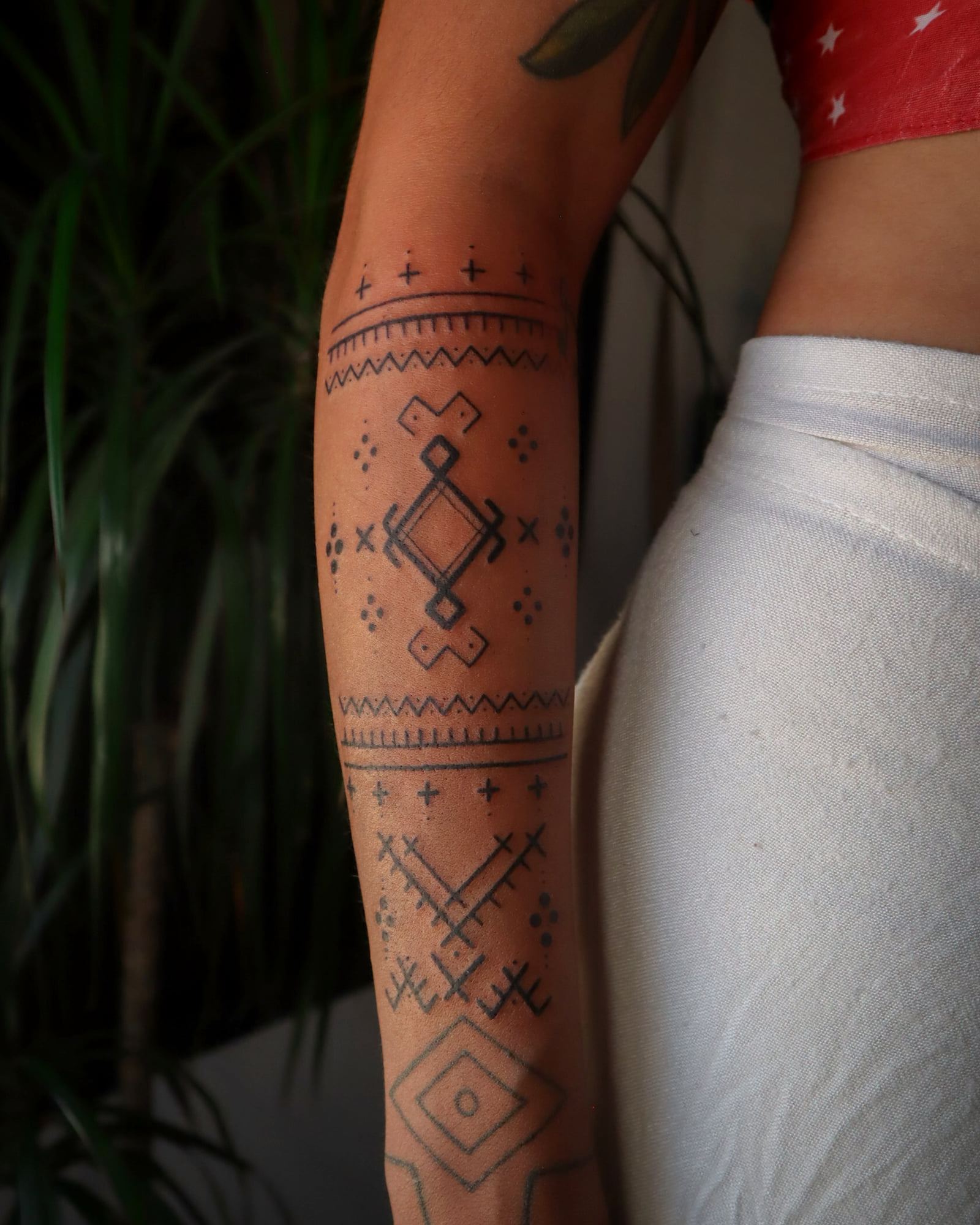
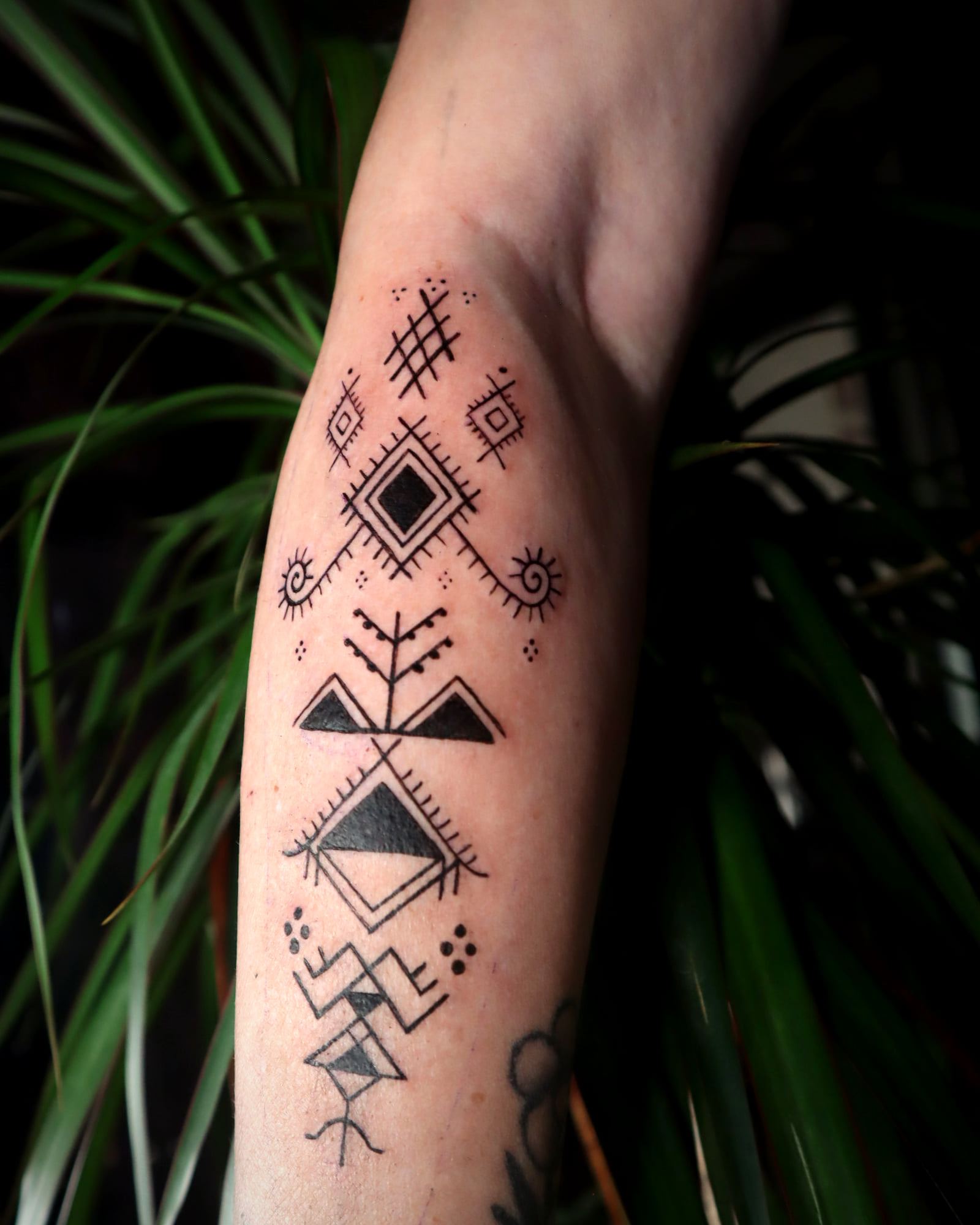
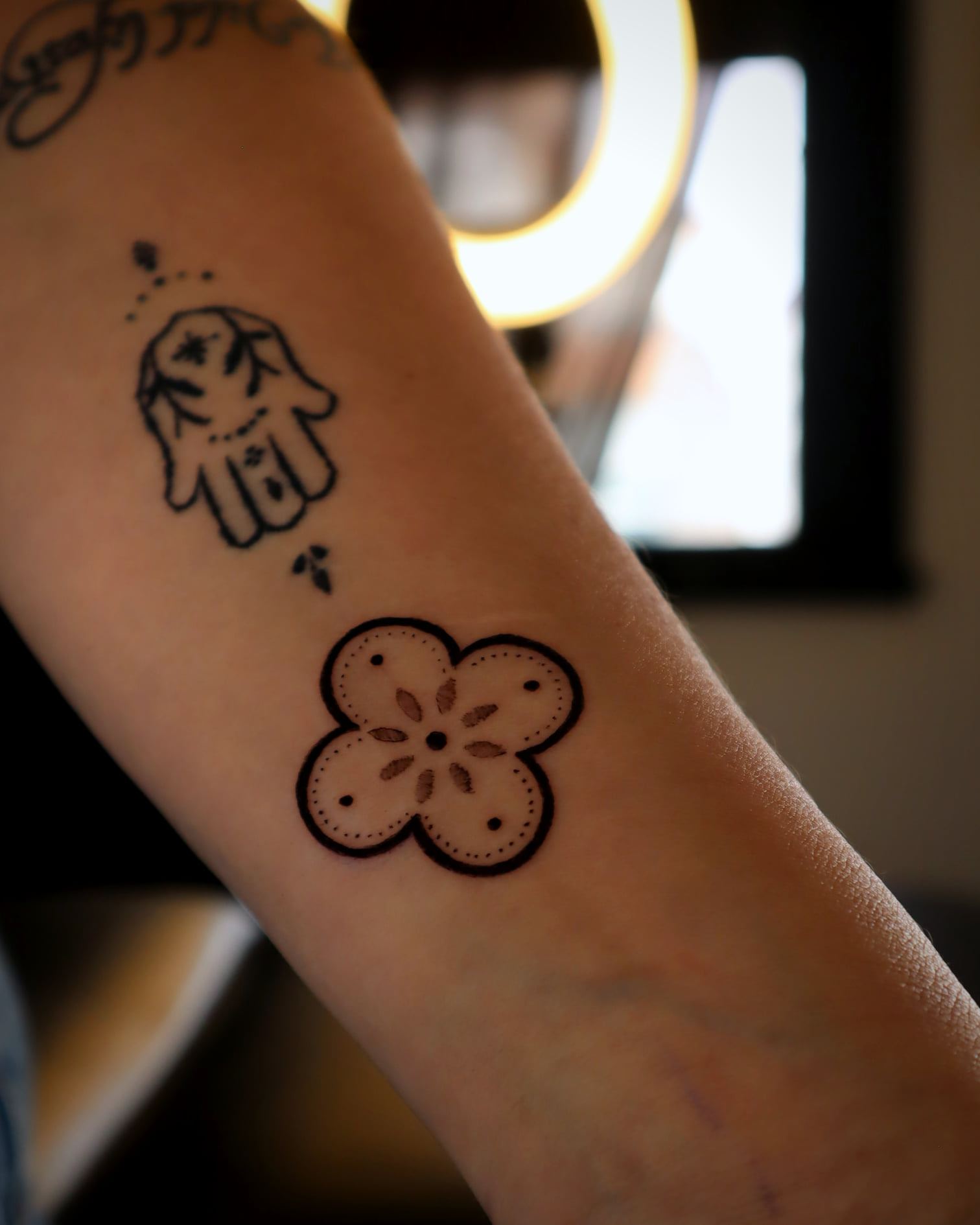
My work is not reproduction. I do not copy the facial tattoos of Amazigh women onto foreign skin, and I will decline if that is what you ask for. Instead I compose original ornamental pieces in that language: bands and columns of geometric pattern, dotwork fields, symmetrical structures that follow the body — a line down the spine, a band around the forearm, a composition across the shoulder blade or the back of the calf.
Technically this is precise, unforgiving work. Straight lines and evenly spaced dots leave nowhere to hide, so I build each piece slowly: single sessions for smaller bands, two or three sittings for a spine or a full forearm. I use fine liners for the structure and tight groupings for the dotwork, and I calibrate line weight to the placement — slightly bolder where skin moves and stretches, finer where it lies flat. Done this way, geometric blackwork is one of the best-ageing styles there is. The lines soften a little over the decades, as all tattoos do, but the structure stays legible.
Why do this in Tangier
You can get geometric tattoos anywhere. What you get here is proximity: this tradition belongs to Morocco, and getting tattooed in Morocco, by a Moroccan artist who has spent years looking at this ornament — in textiles, in silver, in pottery, in the surviving photographs and studies of the women’s tattoos — is a different thing from downloading a “Berber pattern” from a search engine. When travellers write to me about an Amazigh tattoo in Tangier, this is usually what they are looking for: something connected to the place, made with respect for where it comes from.
Starting a project
Every piece begins with a conversation over WhatsApp or Instagram. Tell me the placement you have in mind, the rough size, and anything that draws you to this tradition — a textile, a piece of jewellery, a photograph. I design the composition myself, for your body; I draw the final structure to fit the exact placement, and we adjust it together before the needle touches skin.
If you are planning a trip, write before you book your travel if you can. My schedule opens in announced windows and ornamental pieces of any real size need a confirmed session, sometimes two, with healing time before you fly or swim. A tattoo in Tangier in this style is not a souvenir picked up in an afternoon. It is a considered piece of work — which is exactly why it is worth planning for.