Blackwork
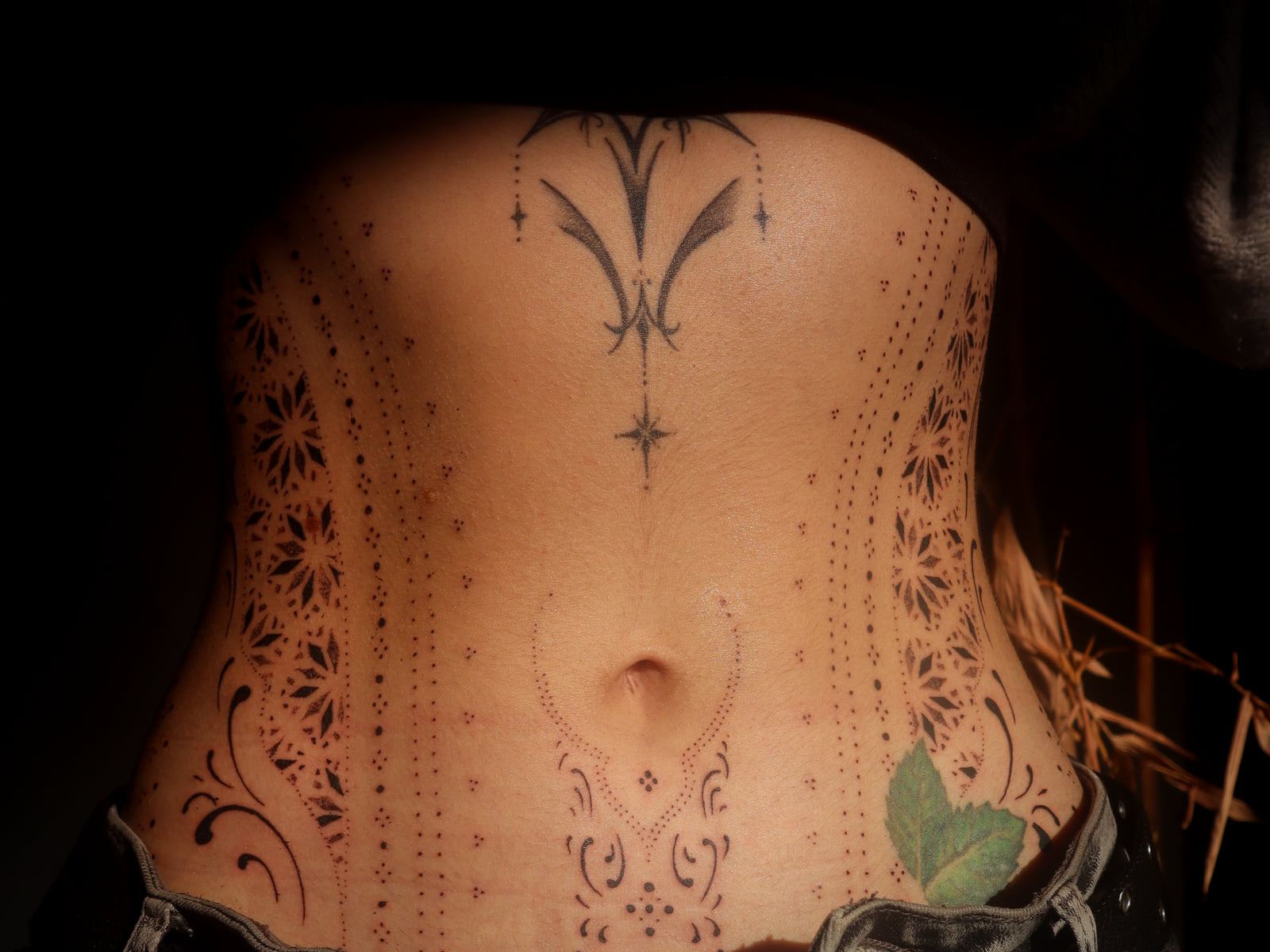
Tattooing reduced to its strongest element: black ink, used with intent. Solid fields, heavy linework, dotwork and negative space — the most durable work I make.
One pigment, many languages
Blackwork is less a single style than a commitment. Everything is done with black: bold graphic compositions, solid packed shapes, ornamental linework, dotwork gradients, abstract forms, and designs where the untouched skin — the negative space — does as much work as the ink. My blackwork often overlaps with my Amazigh ornamental pieces, since both share a foundation of geometry and repetition, but blackwork as I practise it is broader: illustrative, abstract, architectural.
What unites all of it is legibility. A blackwork piece should read instantly, from across a room, and still reward a close look. That double reading — silhouette first, detail second — is the design standard I hold every piece to.
Technique
Different blackwork asks for different tools. For solid black fields I pack with large magnums in overlapping passes, working for even saturation without chewing the skin — a properly packed black heals smooth and dense, not patchy. For linework I use round liners sized to the design’s weight, and for dotwork I place stipple by hand density: tighter dots read as tone, sparser dots dissolve a shape into skin.
Solid black is physically demanding to receive. Large packed areas are usually the most intense sessions I do, and for big coverage I split the work into sittings a few weeks apart. Smaller graphic pieces and linework compositions are typically finished in one session.
The style that ages best
Here is the plain truth about longevity: black ink, applied solidly, is the most stable thing you can put in skin. Fine styles fade and soften; colour shifts; heavy black endures. Decades on, a blackwork piece is still black, still graphic, still itself. Skin texture changes around it — that is normal — but the statement does not weaken. If you want one tattoo that will look deliberate at seventy, this is the style I point to.
Placement
Blackwork scales to almost anywhere, but it loves placements it can wrap: full bands around the forearm or calf, panels on the upper arm, large fields across the chest, back or thigh. Because the style works with silhouette, placement is a design decision, not an afterthought — the same shape can be quiet on a shoulder and monumental on a sternum. Bring me the placement and I will design for it, or bring me the design and I will tell you where it belongs.
Getting blackwork done in Tangier
For travellers, blackwork is practical: most pieces are single-session, and healing is straightforward if you keep the fresh tattoo out of the sun and the sea for two weeks. A blackwork tattoo in Tangier fits well at the start of a longer Morocco itinerary heading inland, or at the end of a coastal trip — we can plan the timing together.
To start, message me on WhatsApp or Instagram with your idea, placement and size. References help, but I design everything myself; if you send me another artist’s tattoo, I will use it only to understand what you respond to, never to copy. Getting tattooed in Morocco in this style means leaving with something permanent in the fullest sense — work that is built, from the first line, to outlast fashion.
Pieces in this style
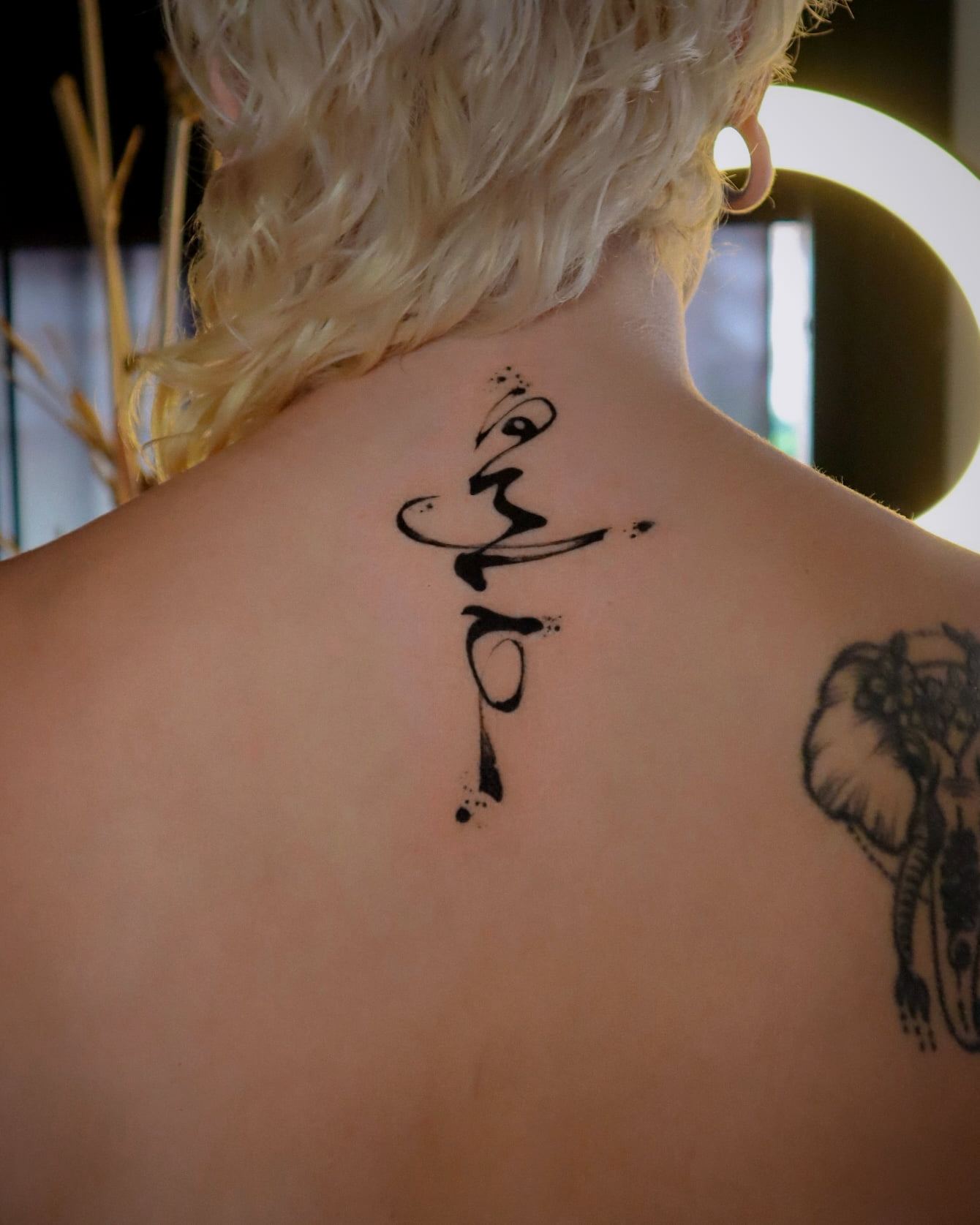
Vertical Arabic calligraphy in solid black, between the nape and the upper back.
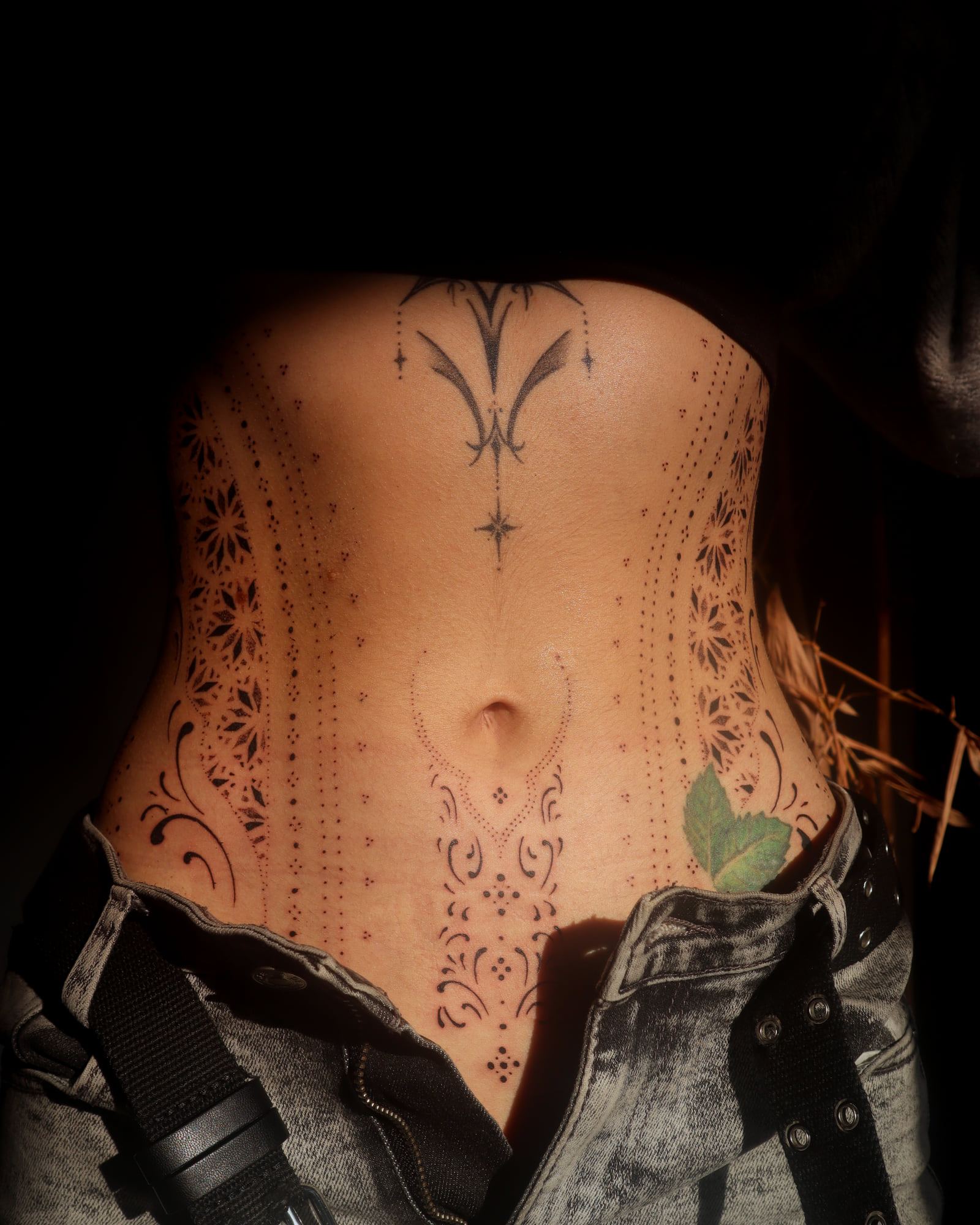
Ornamental composition across the stomach in fine lines and dotwork.
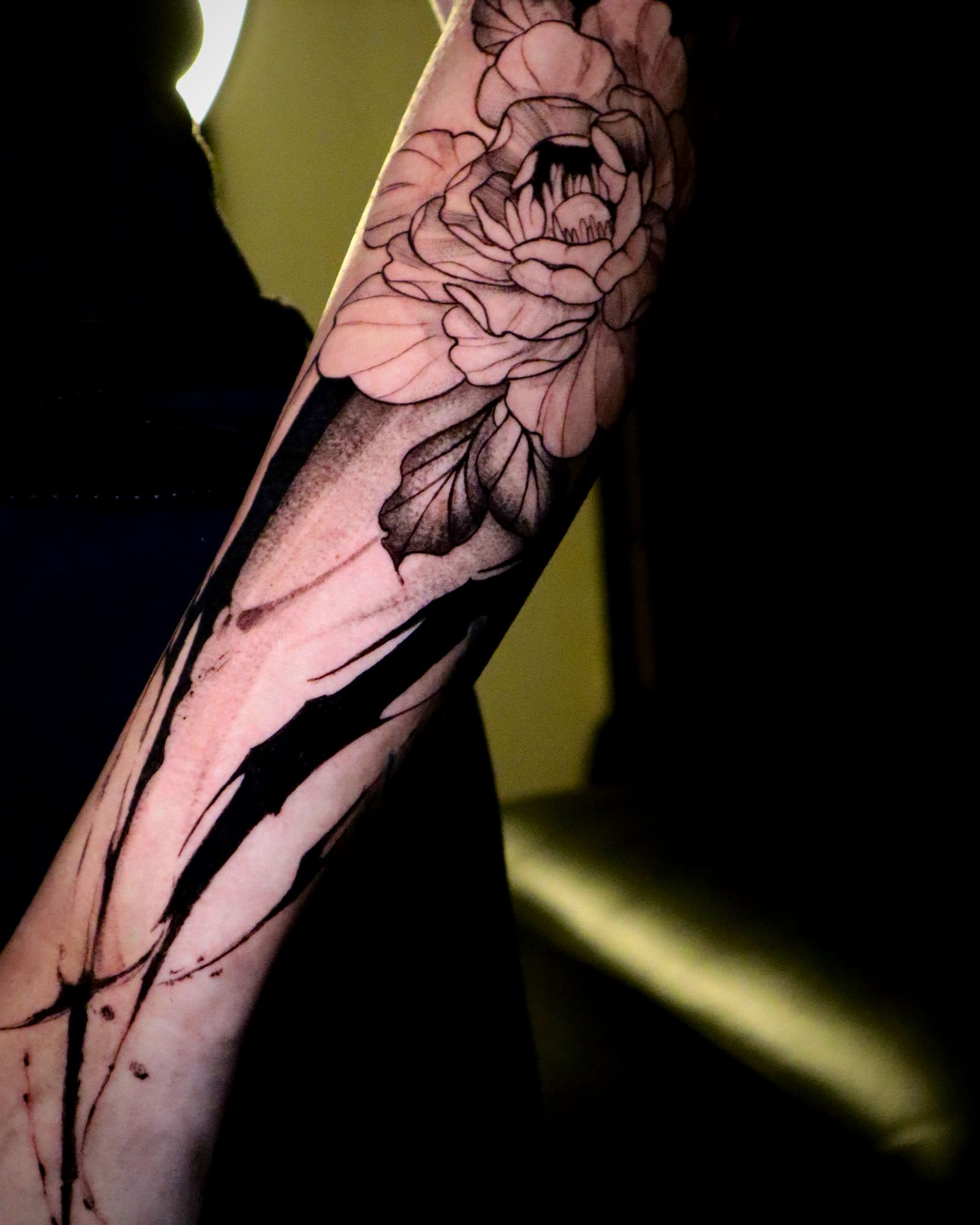
Black and grey peony cut through by black brushstrokes.
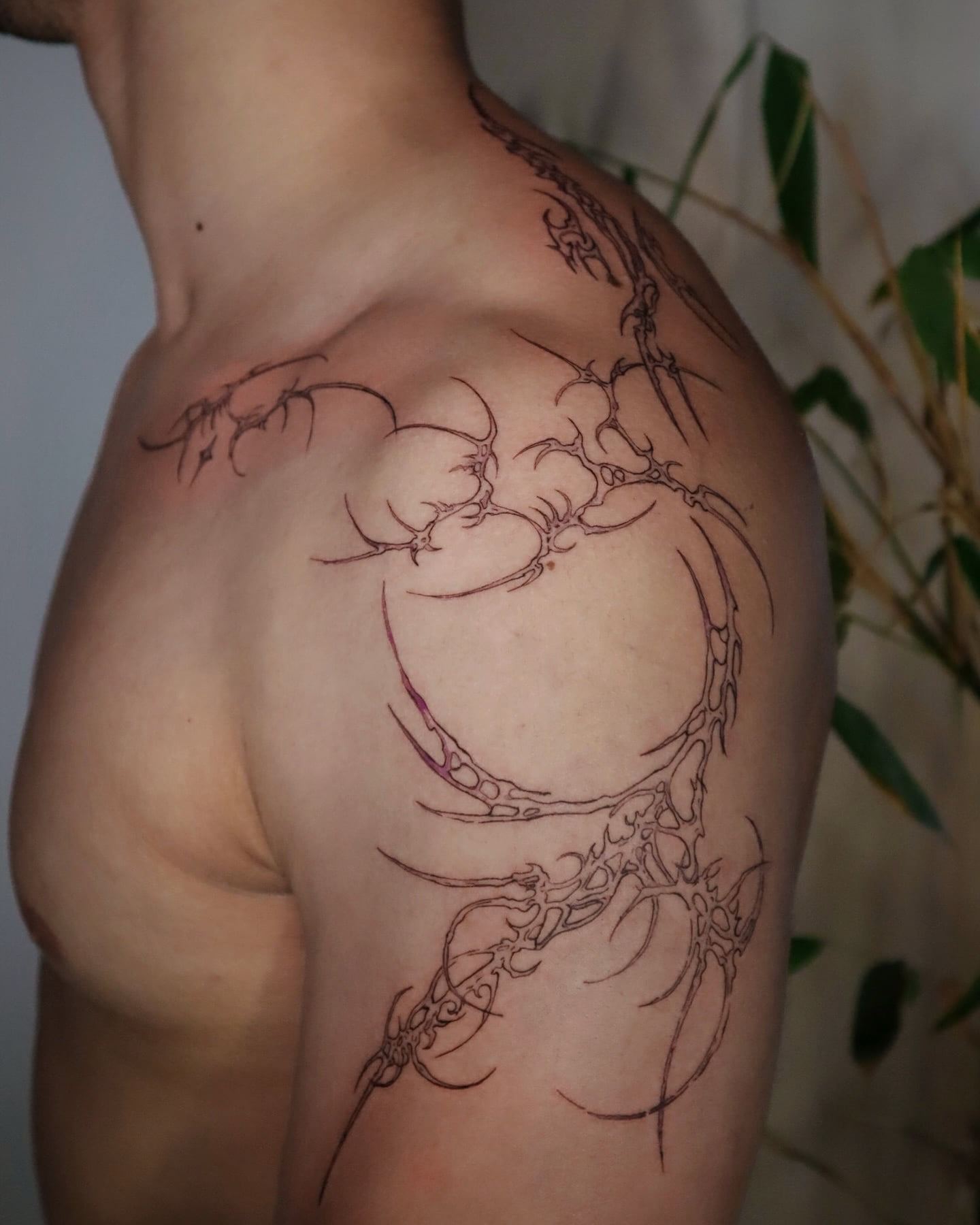
An ornament of thorns and hooks wrapping the shoulder.
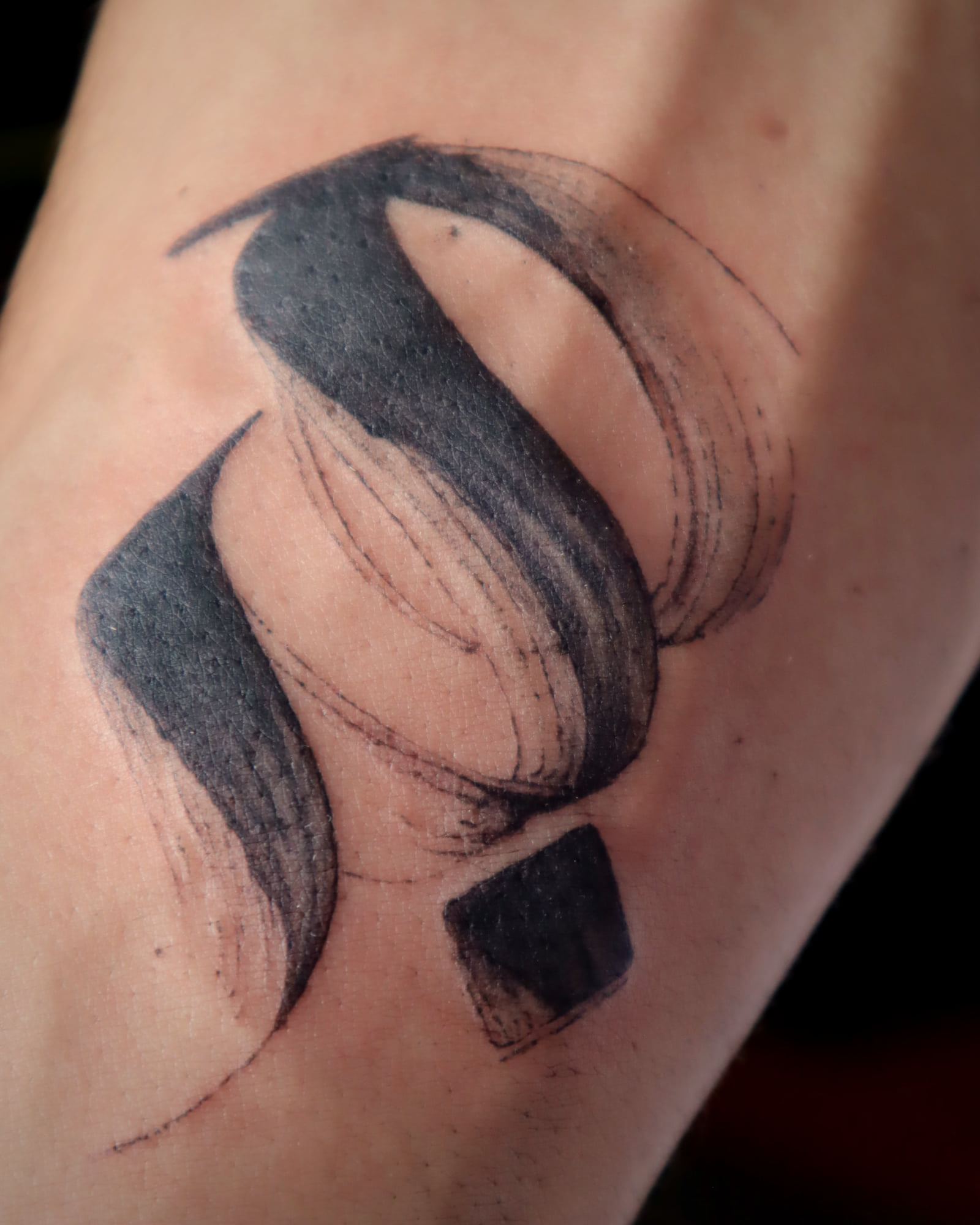
A brush-calligraphy form in solid black and dry strokes.
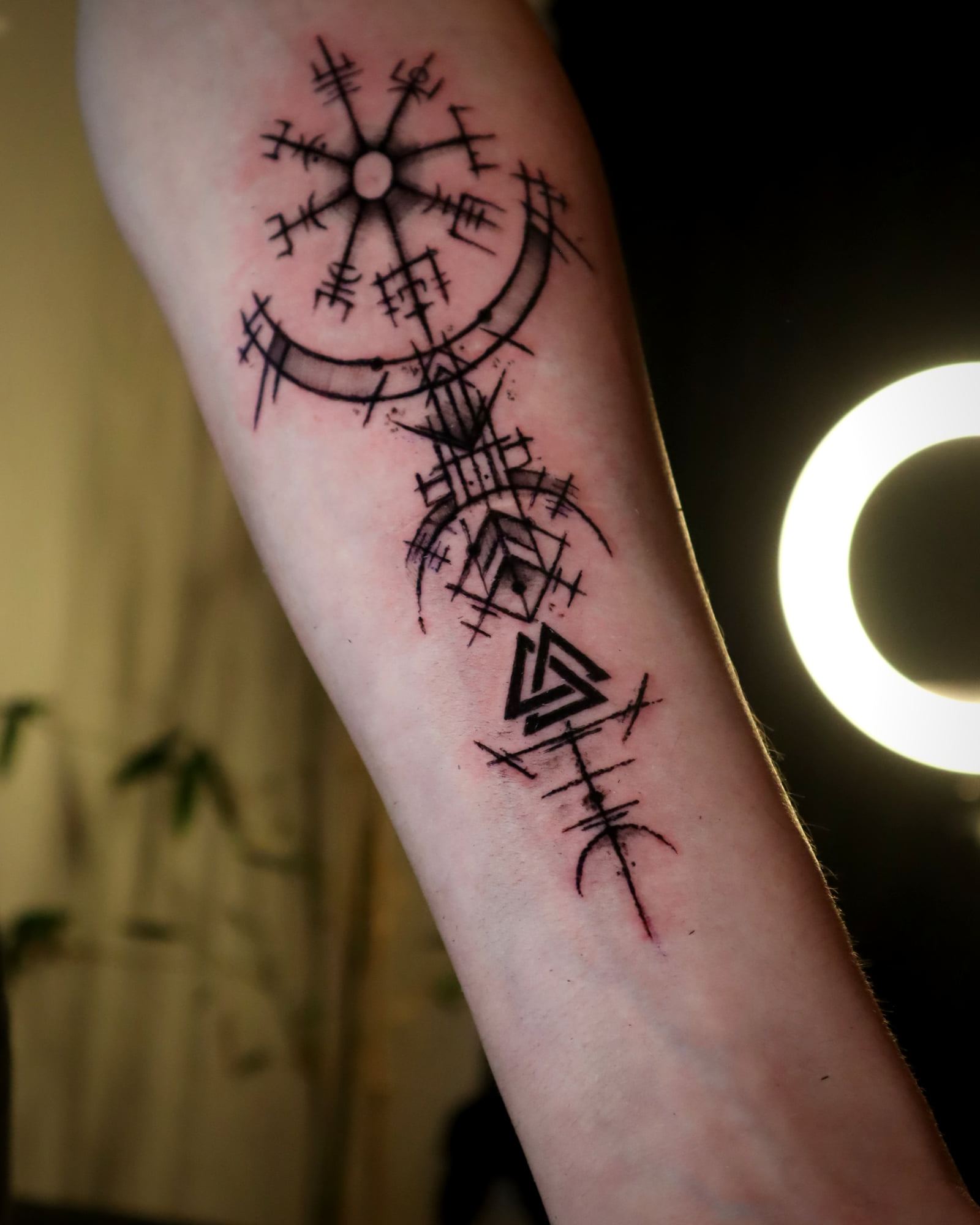
Vegvisir and Norse signs stacked along the forearm.